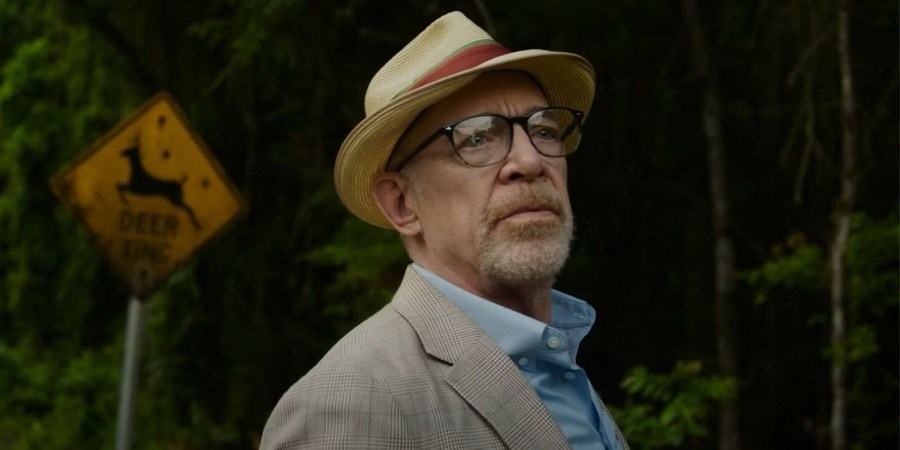
Casting recognizable actors in undersized roles can meaningfully dupe audience expectations.
When Juror #2 and Heretic roll credits, you might be confused why names as (relatively) famous as J.K. Simmons and Topher Grace agreed to play such minor characters.
When they first appear in their respective movies, they seem primed to return in the third act to save white-knight the day, serving a narrative function befitting their Q score.
But when they don’t, it raises questions as to why these new movies wanted to use known commodities to instill an erroneous belief that they’ll be the eventual saviors of the drama. For both, this decision feels like a commentary on the limitations of establishment authority (figures?) to rescue whom they’re sworn to protect.
In Juror #2, J.K. Simmons is a retired cop. Once he’s booted from the jury — and, thereby, the movie — it’s fair to anticipate that he’ll sleuth out the guilty party from the outside.
But, by the letter of the law, that’d be illegal. In the American judicial system, the police can’t always ensure justice. Sometimes, it comes down to everyday citizens.
In Heretic, Topher Grace is a religious caretaker, charged with overseeing the wellbeing of our two protagonist gals. The fact that he fails at this duty goes to show: organized power can only do so much, despite our desire to entrust such institutions with our very lives.
 Write All Nite