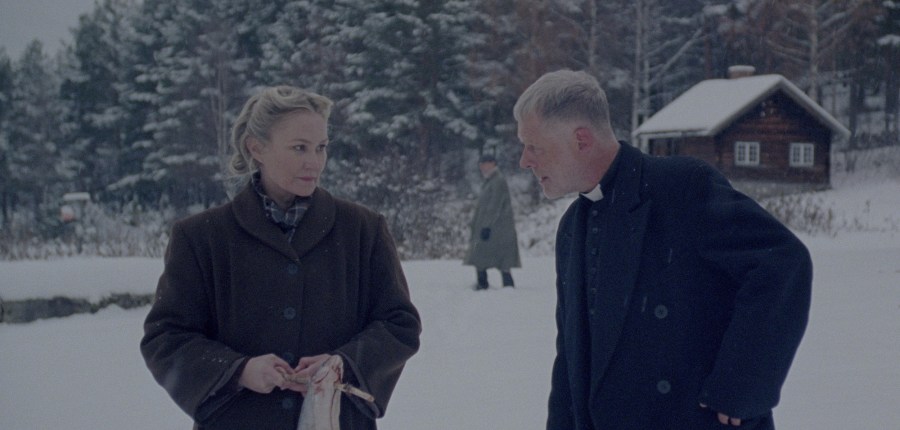
The Fishing Place’s final scene sticks out like a sore thumb.
Before this denouement, the movie tells a period-specific tale set entirely during World War II. Despite stylistic flourishes that call attention to the fact that we’re watching a movie, these elements do not feel like modern intrusions; rather, they’re on par with the rest of the storytelling’s brand of avant-garde.
And then, out of nowhere, the last sequence becomes a behind-the-scenes glimpse of 21st-century life on set as the movie is being filmed. The sheer length and extremity of this fourth-wall-breaking conclusion forces the audience to reckon with the why behind this jarring shift.
And *any* answer may not occur to you in the moment.
Nor even immediately afterwards.
Or maybe ever.
But there’s no deadline to fully wrapping your brain (whatever that means) around a piece of art. The Fishing Place’s coup-de-cinema ensures that questions stay with you, because no one can miss the provocation, nor overlook it in their macro assessments, nor forget about it.
Which seems to be the idea behind obvious provocations without obvious intent, besides the intent to provoke.
 Write All Nite