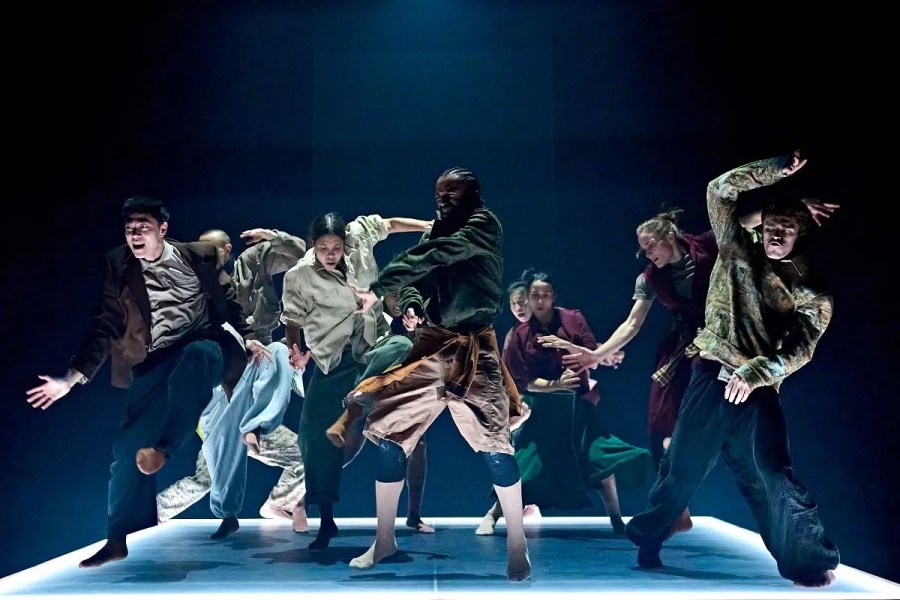
I’m no scholar of antiquity, but my understanding of Greek tragedies is that they oscillate between character scenes and chorus scenes.
A slipshod definition of character scenes: when the major characters dialogue and interact and enact the action that moves the narrative along. And then, in between these scenes, a chorus — representing a group of people from the world of the play — comments on the contents of what’s just happened in the “character scenes.”
But no words are uttered during the chorus scenes in Hofesh Shechter’s (or is it Matthew Warchus’?) Oedipus at London’s Old Vic, instead replaced by bacchanalian raves set to raging techno — dancing that doubles as the chorus’ customary commentary, albeit in a more abstractly expressive sense.
What group of people does the chorus represent?
Might they represent ideas and themes as much as ontological beings?
And maybe these questions have multiple answers, which change from scene to scene, and even moment to moment?
 Write All Nite