The Shrouds isn’t the sole ending in theaters now that feels abrupt enough to have made both of my audiences guffaw at the sheer surprise of the credits rolling.
Misericordia also understands that concluding a story at a point without an obvious resolution can compel viewers to wonder what the creators intended to achieve by dipping out prematurely.
Ending any scene earlier than expected can achieve a similar effect, albeit in a more micro capacity, like unmooring the audience and messing with pace. And, as with The Shrouds and Misericordia, a quick cut can prompt us to consider why the final moment of the scene constitutes a fitting denouement, and what’s conveyed by the unanticipated nature of the out.
In theater, a sudden scene-ending can be emphasized by a hard, unforeseen blackout, which adds an experiential, visual punch. After being thrown into this unpredicted darkness, the audience can use this temporary break in the action to contemplate why the scene wrapped up so briskly, and the potential importance of whatever was happening that’s now underlined by the rushed cap.
The Antiquities revels in this interpretative ambiguity. The bounds of each “exhibit” in Jordan Harrison’s new play seem key to comprehending the museum, and its erectors’ relationship to the tech-generated tableaus about humans. Plus, the swift blackouts in the Playwrights Horizons production parallel the role of death — the ultimate blackout — in the story; we — humans and humanity — know that our demise will arrive eventually, but the when not only constantly eludes (except in hindsight), but comes to define, well, everything.
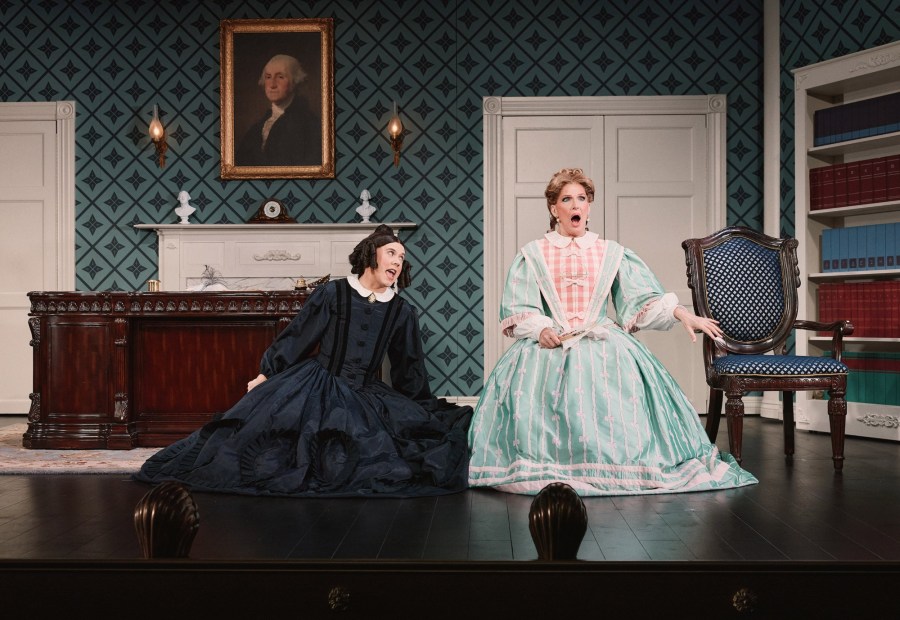
On the other side of the tonal spectrum, the speedy blackouts in Broadway’s Oh, Mary! establish its antic rhythm, AND turn the last line or gesture of each scene into emphatically-underscored punchlines of pure shock.
AAAAAAND……
…in the spirit of the show’s humor……..
….Lincoln’s death is kind of the most famous blackout to happen during a play in theater history???
 Write All Nite