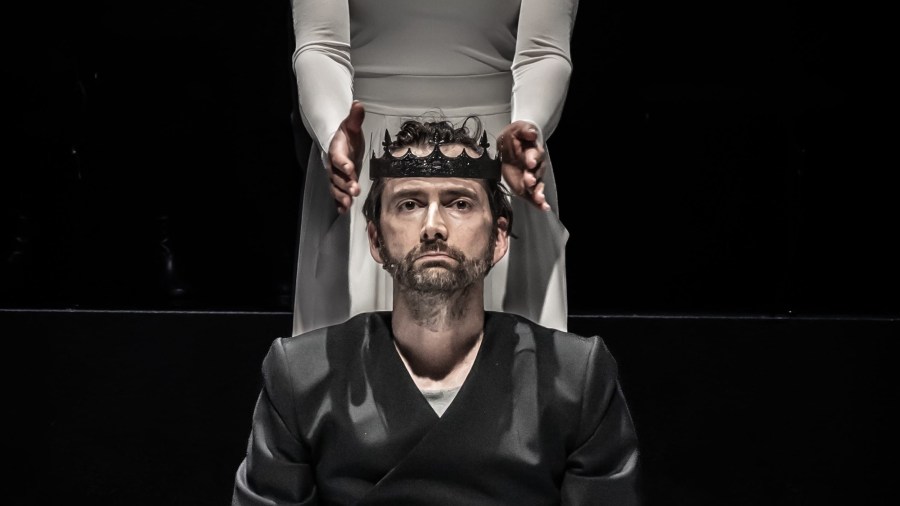
I’ve seen damn near every filmed recording of a London production that’s been screened in NYC movie theaters.
And David Tennant’s Macbeth is the second to utilize the camera as dramaturgy.
The broadcast decided to have Tennant perform passages of Macbeth’s soliloquies directly into the lens…whereas Cush Jumbo delivers Lady Macbeth’s monologues as if she’s talking to herself. Why is he privy to the company of the camera, whereas she’s isolated in her own psyche? And why does she acknowledge the camera only before she helps murder the king??
Tennant’s eyes during his soliloquies become interpretive material for his performance. Why does he look into the camera for some lines, and why does he peer away for others — a question that can stimulate textual analysis.
Granted, the recording cannot be an accurate archive of the original production, because Tennant clearly altered his approach for the camera (weirdly, he starred in the last recording to similarly switcheroo the original; his monologues in GOOD are pitched directly down the lens).
In so doing, the recordings become a side-by-side comparison of the differences between stage acting and screen acting.
 Write All Nite