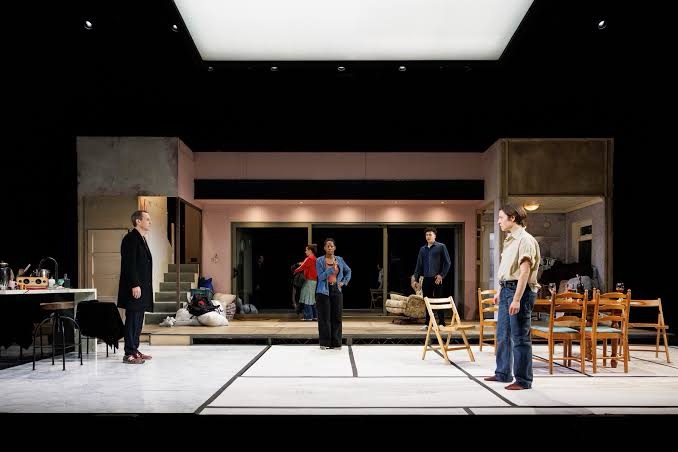
What operates as the Greek chorus in Alexander Zeldin’s The Other Place?
As a modern riff on Antigone, the interludes between scenes should be the chorus’ moment. Instead, wordless, discordant, electronic sounds/music replace the chorus’s usual contributions.
What gives?
In Greek tragedy, the chorus functions as a more objective perspective on the play. They exist in a different — but overlapping — realm from the characters, commenting on the action from an almost omniscient POV. The group provide an implicit structure, representing an order to the story and its universe that the characters may not be privy to, but the effects of which dominate their wellbeing.
Swapping out this organization with Yannis Philippakis’ chaotic sounds-masquerading-as-music seems central to The Other Place’s metaphysics. Whereas a chorus would try to make sense of the powers fueling the play through comprehensible words, the central family is left to their own natural devices to cope with the nameless enormity undergirding and overriding their lives.
How do we mere mortals deal with the deafening cacophony of being alive, without guidance from on high? Like the score, we’re beset by forces that defy and transcend speech, all while being inundated under their overwhelming noise.
 Write All Nite