Is one month a sufficiently-respectful pause before unpacking “Wuthering Heights” spoilers?
That’s your warning.
When Romeo and Juliet is summarized early in Emerald Fennell’s big-screen adaptation, the reference feels like a nod to the shared societal barrier that complicates the central courtships in Emily Brontë’s novel and Shakespeare’s play.
With a notable difference: Romeo and Juliet are from rival, but equally high-born families, whereas class separates Catherine and Heathcliff hierarchically, in the sense that she’s considered “above” him on their social ladder.
But, by the time the closing-credits roll on “Wuthering Heights”, its Romeo and Juliet shout-out has adopted new meaning.
The former’s verbal retelling of the latter begins with the take that The Nurse is primarily to blame for The Bard’s tragic conclusion, as the sole adult who possesses knowledge of their doomed plan, and thus could’ve been mature enough to talk the titular teens out of it, not to mention the fact that it’s her DUTY to protect Juliet…
An interpretation that’s deliberately problematic, for a variety of reasons.
First off, The Friar plays waaaay more of a pivotal role in the kids’ plot, but GOD FORBID Isabella — the Romeo and Juliet summarizer in “Wuthering Heights” — criticize the church.
Nor a man of the upper crust.
OF COURSE she pins culpability on a servant, assuming The Nurse’s power over Juliet…
But who works for who again?
Ultimately, Isabella’s Romeo and Juliet exegesis foreshadows the rest of “Wuthering Heights”.
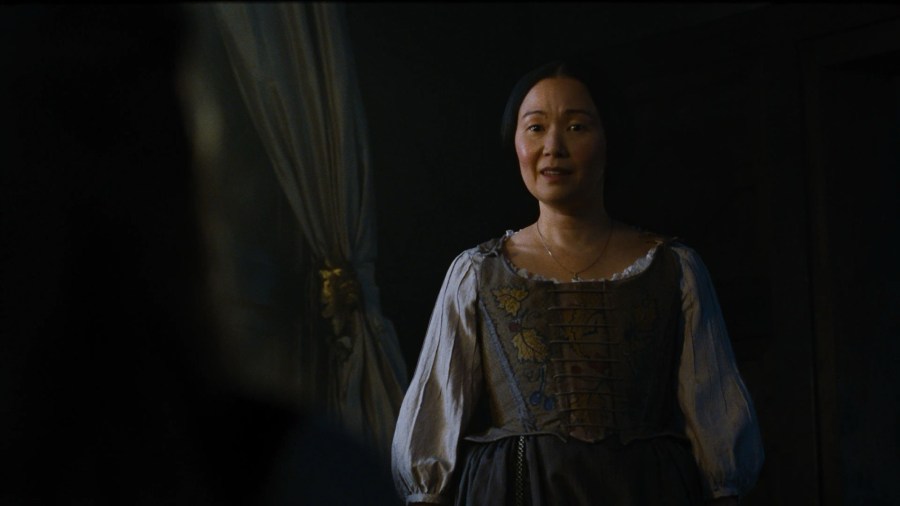
Because Hong Chau’s Nelly is basically Cathy’s Nurse. Except flatten their ages. And add in suggestions of sexual jealousy. And a desire for personal revenge over focusing squarely on what’s best for everyone.
And, Nurse Nelly is objectively more responsible for the calamities in “Wuthering Heights” than The Nurse is in Romeo and Juliet.
 Write All Nite