A longtime dream coming true can clarify what we want that dream to look like in reality, even through contradistinction.
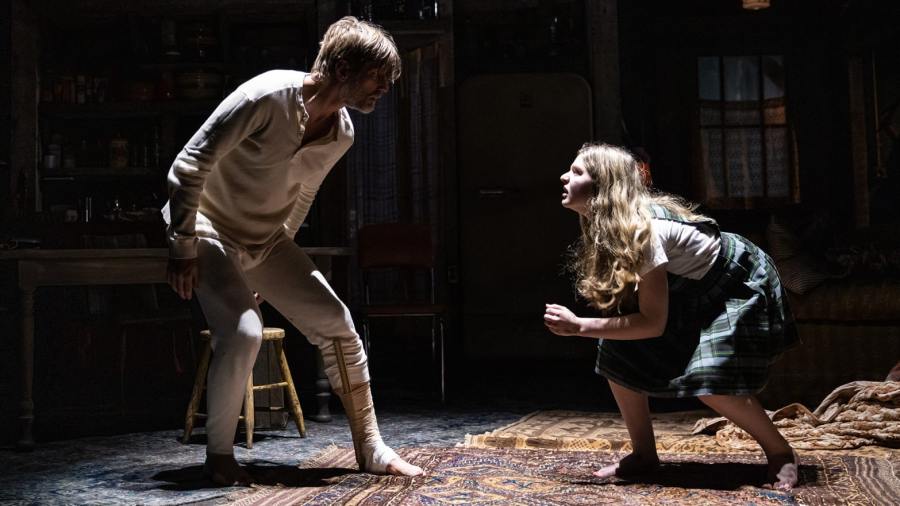
For example, Grey House ostensibly fulfills my personal dream of a horror play on Broadway, but what it lacks pushed me to realize the exact constitution of my dreaming.
Stage horror poses potent possibility steeped in the fact that we know the horrifying tableaus are actually happening in front of us; what’s scarier than a nightmare coming to corporeal life before our eyes?
But this specific type of fear relies on pulling off these frightening sights through convincing artifice, with the means of illusion sufficiently masked; “what precisely am I seeing here” is a bedrock of visual horror.
The stage is a fertile ground for blurring the reality of a production’s fictional horror with the audience’s reality, because both realities exist side by side, live and in person, within the confines of the theater; name another art form where the inclusion of an event like a séance could provoke the audience to worry about a spirit being summoned into our very presence.
Which is why stage horror would be wise to make audiences question whether the staged horror is a part of the show…or is it real? Use plants (Derren Brown alert)! Have stagehands banging backstage walls! Design immersive surround sound to disorient the audience as to where the horror is coming from (if it’s not coming from the stage…then is the call coming from inside the house??).
I’m still traumatized by the uncredited Woman in All Black slinking down the aisle next to me in London’s original The Woman in Black.
 Write All Nite