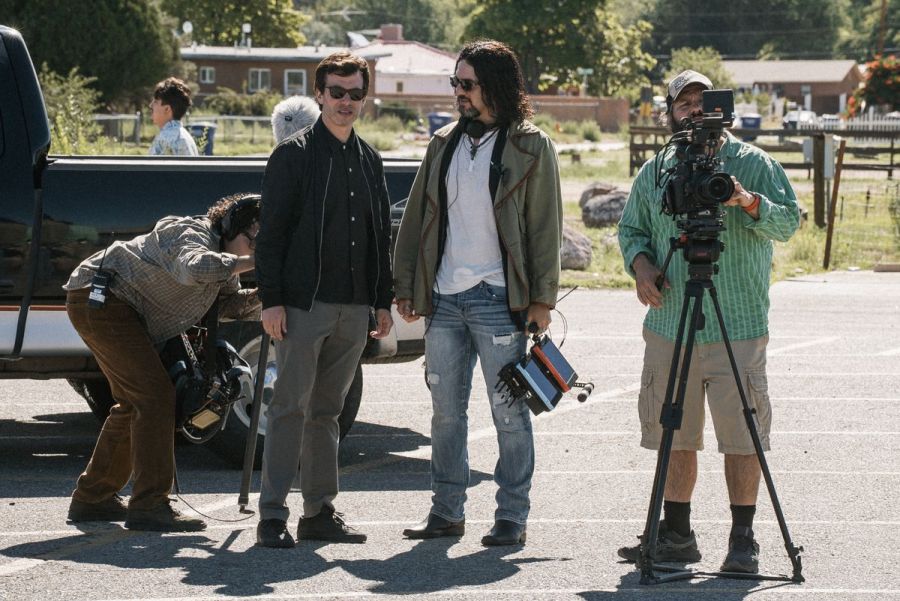
Remember the slew of new documentaries — and May December — that explore what happens to someone’s personal life when artists come to town to adapt their existence into art?
Well, add The Curse to the trend.
AND, do you also remember the cinematographic similarities between The Curse and The Iron Claw? Another connection between the two that may be relevant to their shared voyeuristic cinematography: characters in both perform versions of themselves and their lives around cameras.
Is the drama of their lives scripted? Even if it’s scripted, does that mean it’s fake? Or, when you live inside potentially scripted drama, do you lose sight of which aspects of the drama are real, and which are scripted for the benefit of the audience?
And, if you acknowledge that some of your life’s drama might be scripted, can you control the subsequent urge to believe that there’s an author scripting your chaos whom you can influence? Can you convince the entity in charge of the camera to change the script of your life?
If the camera is a primary author of moving-image stories, then the shared cinematographic style of The Curse and The Iron Claw draws the audience’s attention to the authorial presence of the camera in relation to the action. Their characters reckon with the notion that the tragicomic drama of their lives is scripted, or created by a script. And the minute you concede some of your life is scripted, your consciousness can become overrun in wondering whether or not you can talk to the author(s) about changing the script of your life.
Their cinematography makes the camera operate like a corporeal presence within the characters’ world, with its own perspective. We as the audience feel the presence of an authorial camera, similar to how the characters feel an authorial presence with respect to the relationship between their lives and their lives around cameras.
 Write All Nite