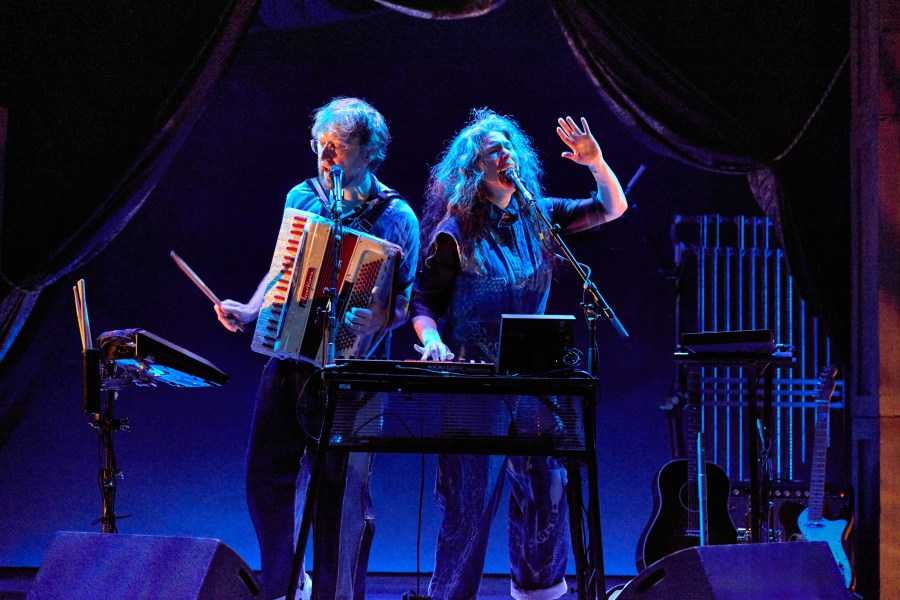
“I’ve never known a miracle not born through pain.”
This line comes from The Bengsons’ grief-stricken new musical The Keep Going Songs — which recently concluded its run at LCT3 — but the sentiment also resonates with the final moment of Mary Jane, now on Broadway.
[Editor’s Note: spoilers ahead. obviously.]
How do we explain the very last beat in Mary Jane, when it looks like she sees a revelation right before the curtain falls?
Am I the only person who reads her finishing facial expression as one of positivity? Not to be binary, but whatever she experiences appears to uplift her in a dramatic catharsis, at least momentarily.
Could it be her miracle born through pain? As discussed in the play, oodles of saints — the Marys of the Bible, and many of the other worshipped figures among its pages — were put through life’s worst suffering, triggering a supernatural transcendence beyond the realm of natural consciousness.
Is it all merely a trauma-induced vision? When reality becomes unbearable, we detach — whether intentionally or not — as a coping mechanism by entering into the more bearable surreality of our minds (which relates to the title’s doubling as psychedelic drug slang).
Or are the afflicted truly witnessing the divine, reserved only for those who most need a glimpse?
For Mary Jane, the answer probably doesn’t matter. Reality is subjective, and without a disproval thesis, whatever seems to bring her comfort at the end can be interpreted as a form of salvation, be it real or imagined.
Whether it’s due to the writers of The Bible, the playwright of Mary Jane, Mary Jane-esque humans writing positive spins on the proverbial narratives of their own lives, or an actual deity writing a moral order for the universe, they grant the downtrodden some earned grace.
 Write All Nite