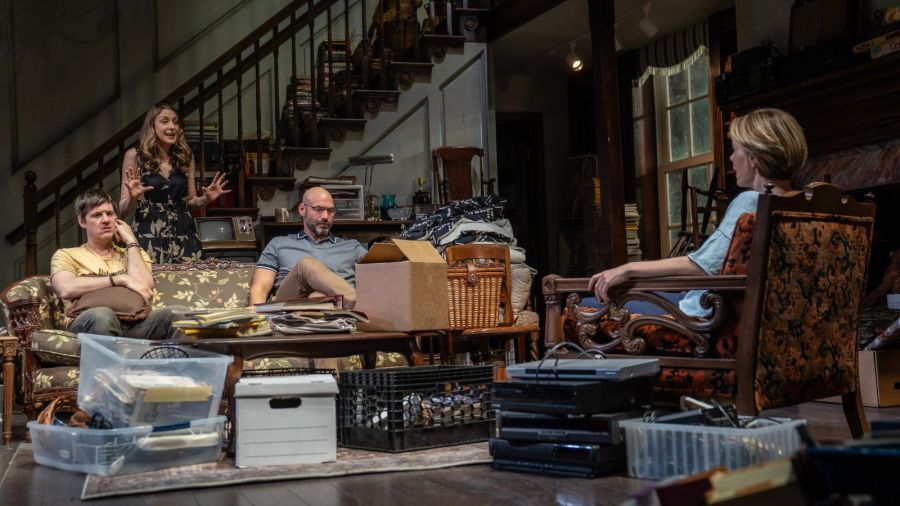
Brother-sister relationships were all the rage on New York stages last season.
Emphasis on “rage.”
And three of these plays — Appropriate, Mother Play, and What Became of Us — circle a shared observation about the nature of sibling relations: no one on Planet Earth lives as similar of an upbringing.
Which can be a double-edged sword.
On the positive edge: as the sole souls raised under the same roof, they have intimate access to what the other goes through in their formative years, and this sort of direct knowledge could provide a unique window into understanding the healthiest ways to care for each other.
But on the other edge: what happens when they go through the same experience, but end up with radically different perspectives? How do they square these differences, or are they ignored? Does it bring them together, or tear them apart?
On this cutting edge is the conviction held by Sarah Paulson’s character in Appropriate that her fraternal woes will be solved only by asking to be removed from the narratives of her brothers’ lives, as an attempt to remove dealing with their subjectivity in the narrative she wants to construct about her own life.
And when we build the narratives of our lives, how do we reckon with counter narratives from blood relatives built from so many shared, but conflicting components?
 Write All Nite