To show or not to show, that is a fundamental question of storytelling.
Audiences tend to focus on the parts of a story that a piece of art deems important enough to detail, but what’s chosen to be skipped — and why — can be equally meaningful.
Juror #2 provides one such example.
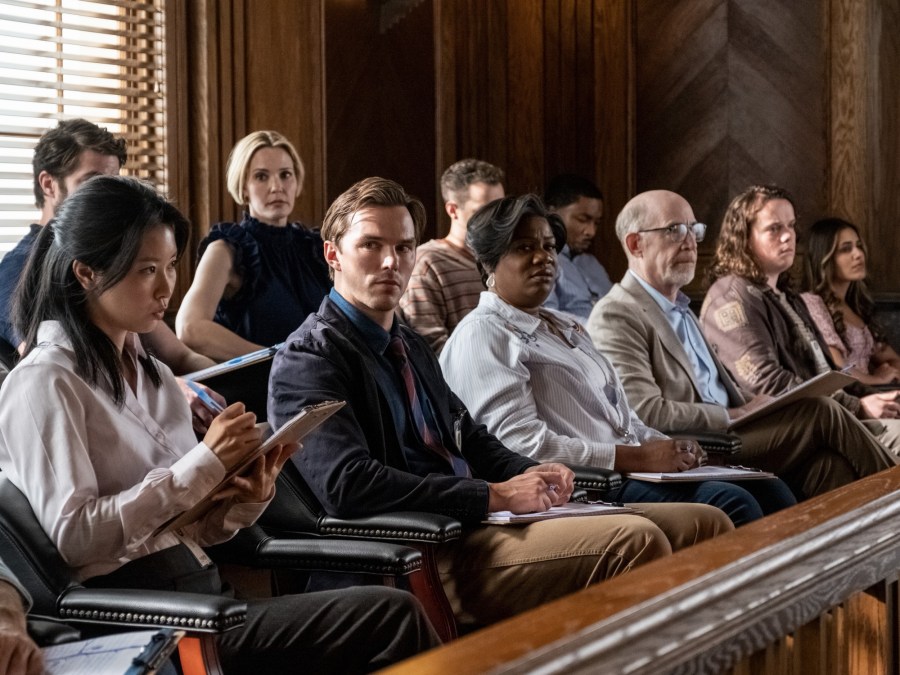
Much of this new movie’s duration is devoted to chronicling every minute twist and turn in a jury’s deliberations…until it completely jumps over their last session, during which our protagonist convinces his fellow jurors to finally agree on a verdict.
Why does the movie opt to elide this seminal sequence, after establishing the story as a no-elide zone? This expectation-countering gap opens a question, to be filled with possible answers.
Is the idea that once a group of people put their trust in a leader, swaying them to do his bidding is such a foregone conclusion that how it actually unfolds doesn’t even warrant our attention?
As a whole, Juror #2 has the spirit of a Jimmy Stewart moral drama, a Frank Capra picture with 21st-century edge.
It’s a humanist portrait of Americans struggling to balance self-interest against upholding the integrity of our — emphasis on the possessive — justice system.
Director Clint Eastwood is 94; a theater should program a series dedicated to all of the movies directed by nonagenarians over the course of cinema history…
It can’t be a long list.
 Write All Nite