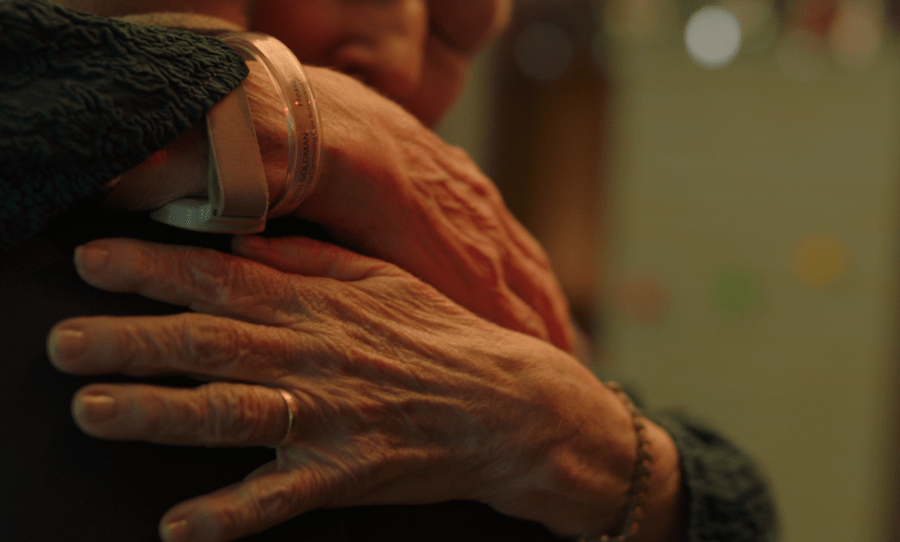
If I had to guess, every single one of you knows at least one family who’s dealt with Alzheimer’s or dementia.
And yet, how many movies or shows can you name that focus PRIMARILY on depicting the reality of this experience?
Florian Zeller’s The Father comes to mind, but it leans into the surreality of the diagnosed’s interior reality, attempting to convey what it might be like inside their upending psyches.
Characters with these diseases aren’t rare, but they’re usually subplots, the source of drama for their familial caretakers — in the center of the frame — to juggle within their everyday lives.
The reason for this dearth seems clear: chronic memory loss is no one’s idea of an enjoyable night at the theater. But at a time when everyone seems to have a personal connection to the affliction, shouldn’t at least some art tackle what so many of us are forced to face?
Enter: Familiar Touch, a new movie that’s about nothing more — and nothing less — than chronicling the process of Kathleen Chalfant’s character moving from Shakespeare’s sixth age of man to the seventh and final age. In case you’re not an As You Like It scholar, the Bard described the sixth age as “an aging man, becoming frail and weak, with a shrinking body and high-pitched voice.” And the seventh age is “old and senile, returning to a state similar to infancy, with a loss of senses and memory, close to death.”
When we first meet her, Chalfant’s outward personality is still intact, yet her recall is all over the place. We watch her last interactions that can still touch some semblance of a meaningful exchange, even if this meaning isn’t predicated on perfect comprehension. She might not recognize her son anymore, but she can still enjoy one last dance with him.
And then, in the concluding scene, Shakespeare’s seventh age has descended upon her; from an external perspective, she’s become a puppeteered body, without apparent cognition.
Roll credits.
Familiar Touch might not sound like how you want to spend 90 minutes. But that’s life. And shouldn’t some art reflect life as life is for many?
 Write All Nite