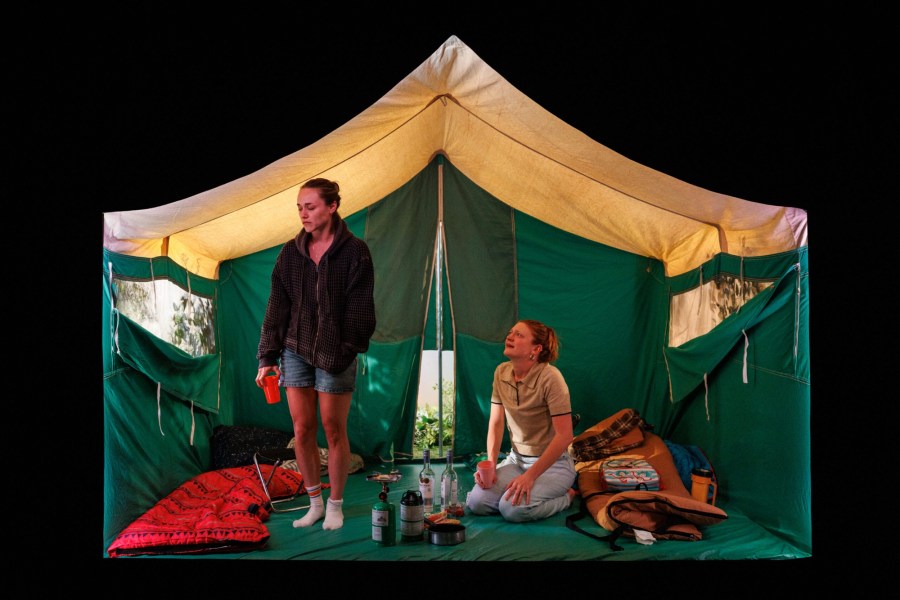
Set design defines the bounds of a show’s world, figuratively and literally.
The decision by Colt Coeur’s production of Camping to shrink HERE’s downstairs space to the confined interior of a tent emphasizes how its cramped intimacy informs and reflects the central relationship in Victoria Lynne Barclay’s new two-hander.
Over the course of decades, the tent’s dingy digs offer them a sacred retreat from the troubles outside the tarp besetting their everyday lives, a safe haven where they can enact who they may want to be, far from the judging eyes of their peers.
And yet, the tent’s dinginess cannot totally prevent darkness from seeping through its porous, patchwork boundary. When young, the tent’s confinement made them feel comfortable enough to experiment with their inner truth, flimsily shielded from the environmental elements. But as they age and literally/figuratively grow, the tent’s pocket-sized realm of possibility becomes claustrophobic.
Which ultimately leads Camping to what I’ve dubbed a “Thunder Road” ending, after Bruce Springsteen’s classic. Basically, when the entire story culminates with one character asking another to ditch their small-town blues in favor of hitting the proverbial — and, usually, literal — road towards a different, unknown future.
So Mary, will you climb in?

