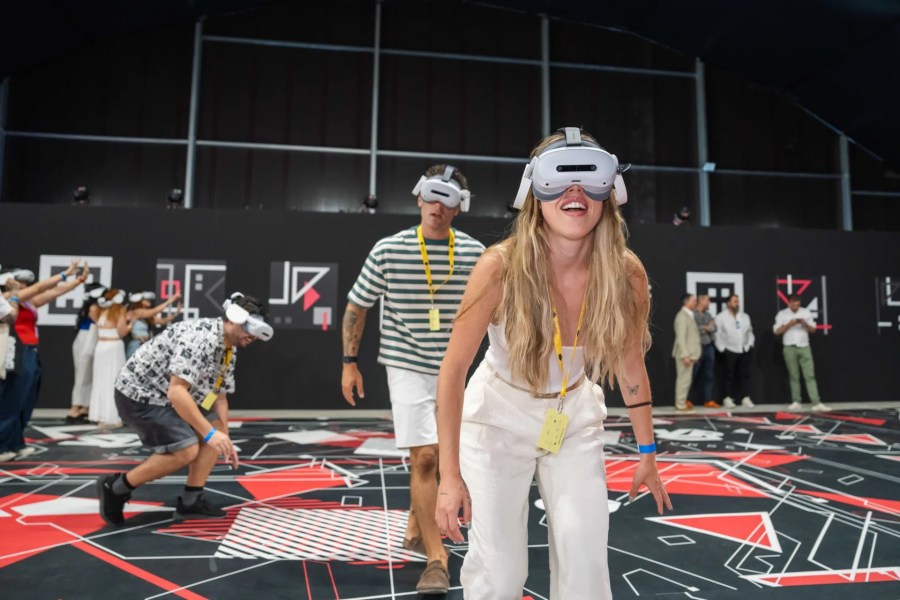
A practical decision can also serve artistic purposes.
The Shed is currently offering one such example, courtesy of the virtual-reality live-show The Black Mirror Experience.
Does “virtual reality” and “live” sound oxymoronic? The Black Mirror Experience exists in this dissonance.
It’s not abnormal for immersive theater to mandate their audiences to sign liability waivers, and it’s standard for any production to ask permission to use and share our contact information with vetted partners. Yet The Black Mirror Experience’s choice to present these requests in a pre-show email AND in person should trigger interpretable suspicion.
And what follows should alarm our reckless willingness to volunteer personal data over to unknown entities without hesitation.
Yondr provides a similar opportunity to transform the practical into analyzable material. Customarily, these phone pouches are designed to protect the privacy of nude actors. But Bug on Broadway and Spirit of the People at the Williamstown Theatre Featival rooted them in more than covering the buff.
Bug’s Playbills included an insert with call-to-actions about how the audience can further interact with the production post-show…once they reconnect to the Internet. Yondr forcibly detaches us from our Big Brother digital overlords, a primary concern for Bug’s characters.
Similarly, Spirit of the People enforced Yondr…even though no one dropped trow…in a play about online addiction. Without a literal answer, the use of Yondr raises the question of what nakedness is actually revealed, away from our scrolling existence.
The Black Mirror Experience is a summer Shed companion piece with last year’s Viola’s Room. Viola’s Room was a maze through purely practical design, while The Black Mirror Experience is a maze through virtual reality.
From the past, to the future?
 Write All Nite