Every so often, a process-focused movie comes along that critics love to say brings to cinematic life the experience of a being a researcher.
Yet the vast majority Hollywoodify the research process, cutting it into the high-speed thrill of how it subjectively feels for the practitioners on the inside, as opposed to how it might actually look and operate from the outside.
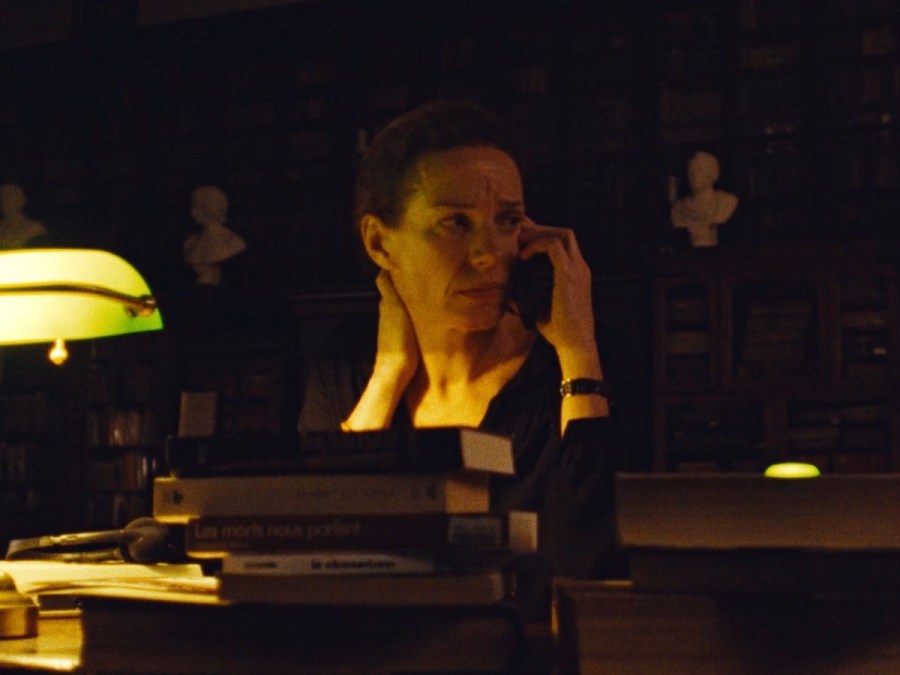
While Chronovisor’s filmmaking also attempts to expressively translate this vocational experience for the screen, this new movie is more steeped in the reality of the research process, especially the library/archive variety of poring through physical objects (in contradistinction to the Internet media rabbit-holes of today, though there’s a conversation between the two…which seems connected to the choice to shoot on film, a more physical record than digital).
The researcher’s mind and body become subsumed in the research, and renders anything unrelated to their studies to be illegibly distant by comparison, as evidenced by how the sound design garbles the dialogue about any other subject to be difficult to engage with, from the opening monologue — it’s chutzy to start a movie with intentionally-alienating language that only later we glean the thematic context to interpret; research is the act of understanding the past in hindsight — to her academic/scholarly lectures on her findings; research invests beyond the point of conventional communication.
The very idea of a Chronovisor feels related to the concept of research; a time machine would fundamentally change our approach to the practice. Why wade through unreliably-subjective sources, when we can just go back in time to confirm? And yet, like researchers, Chronovisor users lose touch with their corporeal existence in their obsessed research trips to rediscover the past.
In much the same way reality and art blur together for diehards of the latter.
If future historians uncover Chronovisor, might they believe it’s nonfiction?

